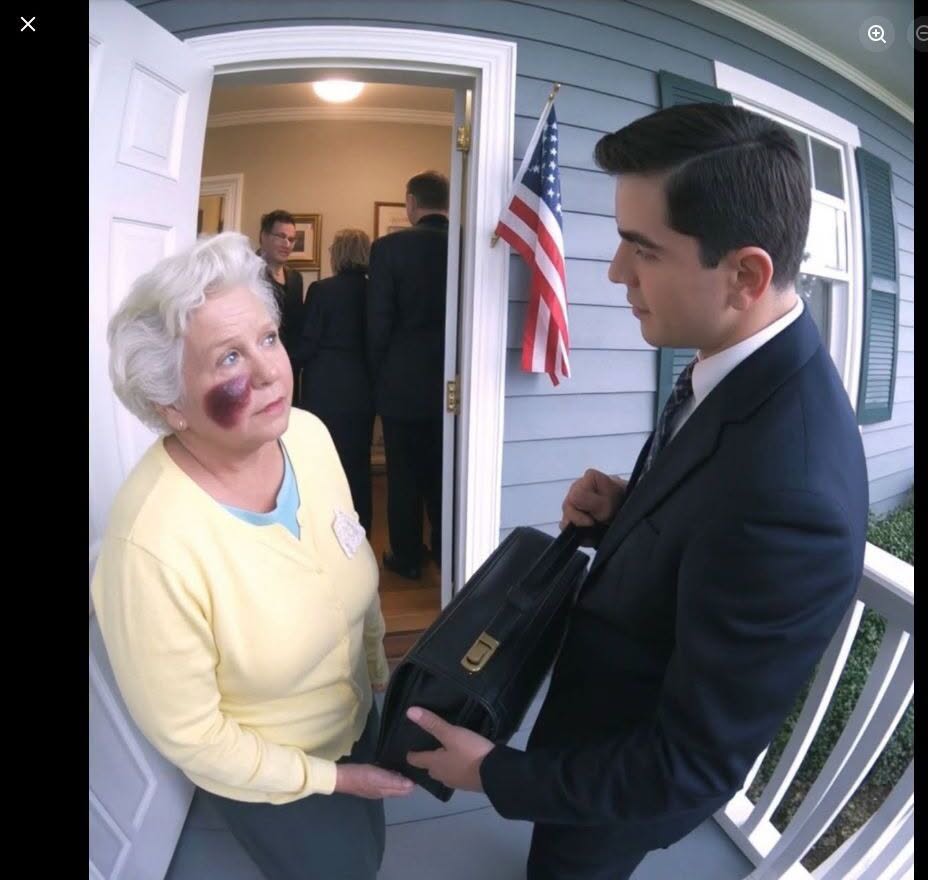
At seventy-three, Loretta had endured factory dust, damaged lungs, and years of sacrifice. She never expected the deepest injury to come from her only son. After she asked her daughter-in-law not to smoke inside, Deacon struck her across the face. Fifteen minutes later, the couple left for dinner as though nothing had happened. Alone in the house, Loretta picked up her phone and finally called the people she once helped—and changed the direction of her life.
Loretta had moved into Deacon and Sloan’s expensive home six months earlier after illness and rising costs made living alone difficult. She paid them part of her disability income each month and tried to remain grateful, even as the “guest room” became a reminder that she was never treated as family.
Her doctor had warned that smoke could accelerate her lung disease. Sloan ignored every polite request and continued smoking in the kitchen. When Loretta asked once more for clean air, Deacon slapped her and told her to stop talking.
The cruelty was not impulsive anger. His voice was cold and inconvenienced. He kissed Sloan, suggested dinner at a steakhouse, and drove away in the luxury car Loretta had once helped him purchase.
In her room, Loretta examined the bruise forming on her cheek. She looked at an old graduation photograph showing the son she had raised alone while working multiple jobs. Then she scrolled through her contacts.
The first call went to Marcus, a respected elder-law attorney. Twenty years earlier, he had been a struggling single father in Loretta’s apartment building. She watched his baby, shared groceries, and encouraged him through law school.
When Marcus asked if she was safe, Loretta nearly lied. Instead, she described the assault, forced payments, smoke exposure, and months of financial control.
He instructed her to preserve receipts, messages, photographs, and bank records. She must not alert Deacon while they documented the abuse.
The second call went to Rhonda, a journalist whose mother Loretta once cared for so the teenager could finish school. The third went to Calvin, a financial investigator who had spent countless evenings eating at Loretta’s table during college.
All three remembered the woman who helped them survive difficult years. None hesitated.
That night Loretta photographed the bruise, broken window latch, cramped room, and records of every payment. Evidence replaced the shame she had carried in silence.
The next morning, she entered the kitchen calmly. Deacon stared at his phone while Sloan ate breakfast. At exactly nine, the doorbell rang.
Marcus stood outside with a protective-order petition and information about emergency housing. Rhonda waited beside him, not to publish Loretta’s private story without consent, but to help document a wider pattern of elder exploitation. Calvin had already identified unusual transfers involving Loretta’s money.
Deacon’s confidence disappeared when he realized his mother had support.
He insisted the payments were ordinary household contributions. Calvin’s review showed charges far beyond the agreed amount, including withdrawals Loretta never authorized. Marcus explained that striking her and exploiting her finances could carry serious consequences.
Loretta did not scream or threaten. She simply said she was leaving and that all future communication would go through her attorney.
With help from a local support service, she moved into a small accessible apartment. The rooms were modest, but the key belonged to her and nobody smoked inside.
The legal process did not erase the pain of what Deacon had done. It did, however, restore control over her income and create a clear record of the assault. Loretta also received medical care for her cheek and breathing problems.
Deacon had assumed his mother was isolated because he had forgotten the lives she touched before his success made him arrogant. The people at the door were not powerful strangers. They were adults who remembered the meals, childcare, advice, and hope Loretta gave them when they had nothing.
For six months, she believed dependence meant she had to tolerate humiliation. One honest phone call proved otherwise.
The greatest change was not what happened to Deacon. It was what happened inside Loretta when she finally said, “No, I’m not fine. I need help.”
Those words did not make her weak. They opened the door to freedom.