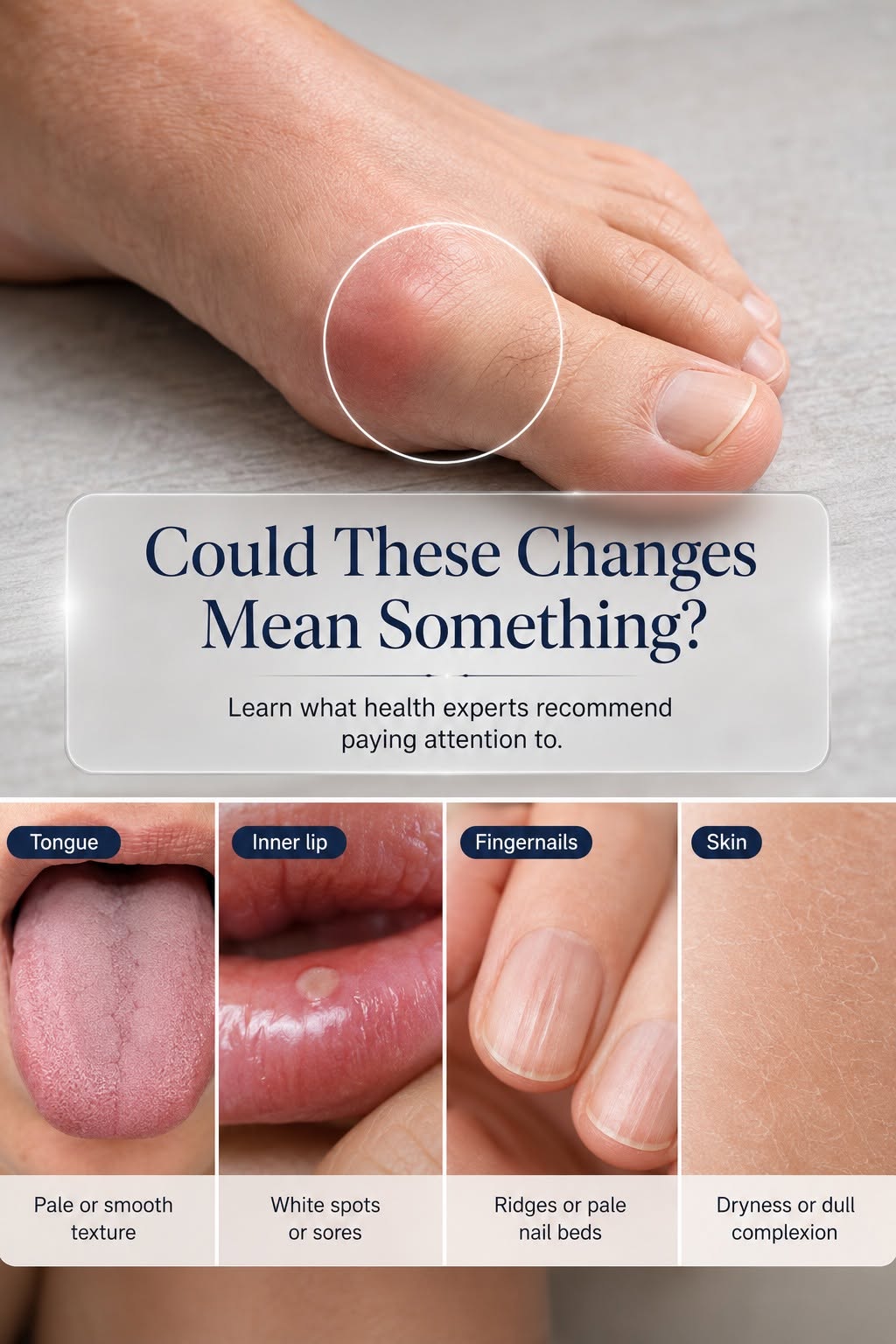
Our bodies often change over time, and many of these changes are completely normal. Occasionally, however, certain physical signs can indicate that it’s worth paying closer attention to your health.
It’s important to remember that no single symptom can diagnose a medical condition. This article is intended for educational purposes and should not replace professional medical advice.
1. Swollen or Painful Toe
A swollen toe may result from a minor injury, irritation, an ingrown toenail, or inflammation. If swelling is severe, persistent, or accompanied by fever or significant pain, it’s best to seek medical evaluation.
2. Mouth Sores
Small mouth ulcers are common and often heal within one to two weeks. Recurrent or long-lasting sores should be assessed by a dentist or healthcare provider.
3. Changes in Your Tongue
The tongue can change in color or texture due to hydration, diet, oral hygiene, or certain health conditions. Persistent changes deserve professional evaluation.
4. Nail Changes
Your fingernails and toenails can sometimes reflect overall health. Color changes, unusual thickening, or persistent abnormalities may warrant a medical checkup.
5. Persistent Fatigue
Feeling tired occasionally is normal, but ongoing fatigue may be related to poor sleep, stress, nutrition, or an underlying health issue.
6. Unexplained Skin Changes
New rashes, moles that change appearance, or skin discoloration should be monitored and discussed with a healthcare professional if they persist.
7. Frequent Swelling
Swelling in the hands, feet, or ankles can have many causes, ranging from prolonged standing to medical conditions that require evaluation.
8. Ongoing Digestive Changes
Persistent bloating, abdominal discomfort, or changes in bowel habits are worth discussing with your healthcare provider, especially if they continue over time.
Healthy Habits That Support Overall Wellness
Eat a balanced diet rich in fruits and vegetables.
Stay hydrated throughout the day.
Exercise regularly.
Get enough sleep.
Schedule routine medical checkups.
Avoid smoking and limit alcohol consumption.
Practice good oral hygiene.
Frequently Asked Questions
Should I worry if I notice one of these signs?
Not necessarily. Many body changes have harmless explanations, but persistent, worsening, or unusual symptoms should be evaluated by a healthcare professional.
Can these signs diagnose a disease?
No. These signs are not diagnostic on their own. Only a qualified healthcare provider can determine the cause through appropriate evaluation.
When should I seek medical advice?
If a symptom is severe, lasts longer than expected, keeps returning, or is accompanied by fever, unexplained weight loss, significant pain, or difficulty performing daily activities, schedule an appointment with your healthcare provider.
Final Thoughts
Paying attention to your body is an important part of maintaining good health. Many physical changes are harmless, but recognizing persistent or unusual symptoms early allows you to seek appropriate medical advice when needed. Staying informed, maintaining healthy habits, and keeping up with regular checkups are simple steps that support long-term well-being.