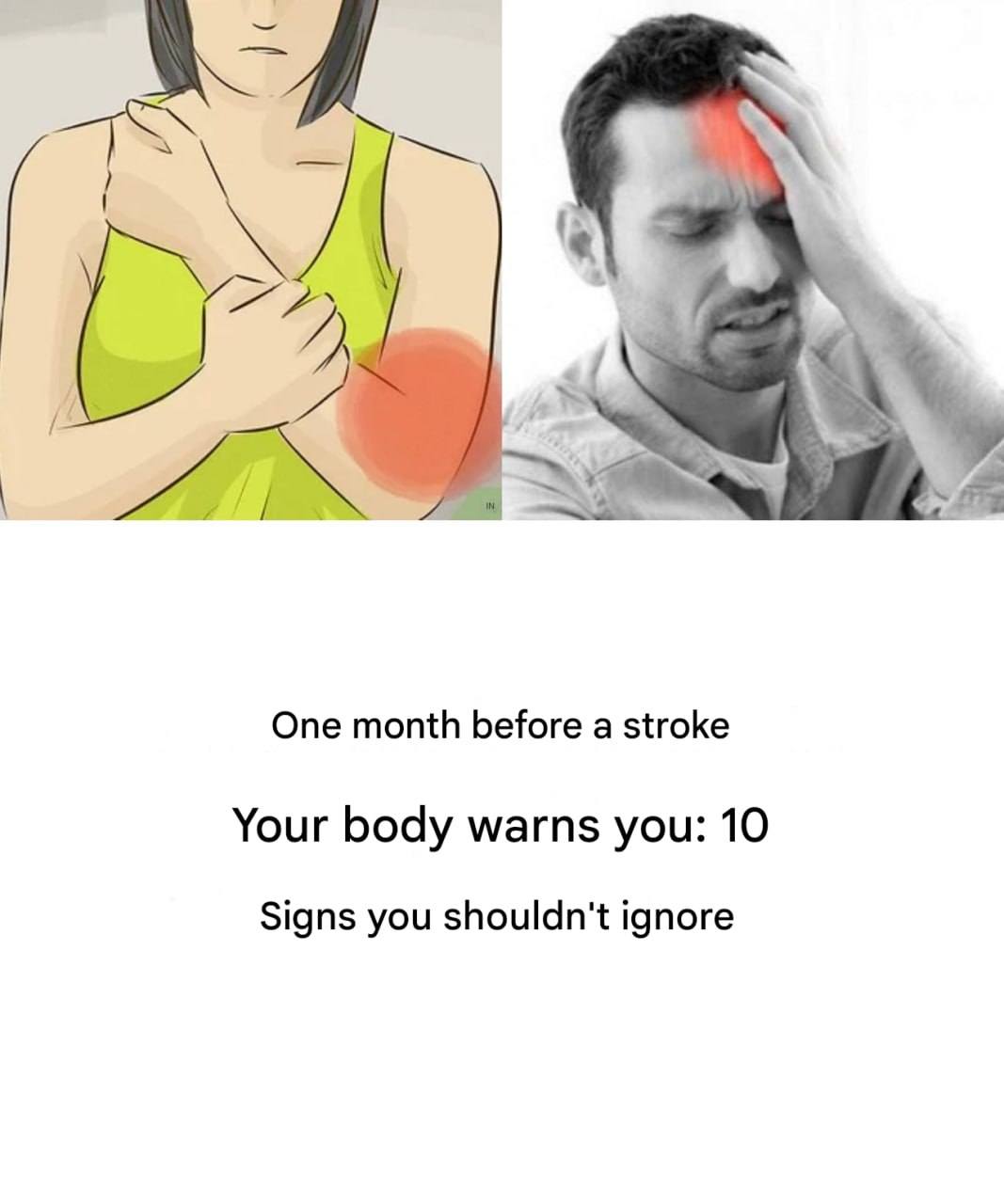
Your body warns you one month before a stroke: 10 signs you shouldn’t ignore
A stroke is a medical emergency requiring immediate treatment. But did you know that your body often sends out warning signals weeks in advance? Recognizing these symptoms early can be a matter of life and death. In this article, we explain what a stroke is, the different types, and the 10 important warning signs you should never ignore.
What is a stroke?
A stroke occurs when the blood supply to the brain is interrupted, thereby cutting off the oxygen supply to brain cells. This can lead to permanent damage, disability, or even death. There are three main types of strokes:
Ischemic stroke: The most common form, caused by a blocked artery due to a blood clot or cholesterol deposit.
Hemorrhagic stroke: Caused by bleeding in the brain as a result of a ruptured blood vessel, an aneurysm, or a head injury.
Transient ischemic attack (TIA): Often referred to as a “mini-stroke”, it is a temporary blockage that resolves itself, but it serves as an important warning sign for a future stroke.
The symptoms of a stroke depend on which part of the brain is affected. However, some warning signs can appear weeks or even months before a full-blown stroke. Let’s take a closer look at these important symptoms.
10 warning signs of a stroke that you shouldn’t ignore
1. SUDDEN EXHAUSTION
Do you feel unusually tired or suffer from extreme exhaustion for no apparent reason? This could be a sign that your brain is struggling with reduced blood flow. If the exhaustion persists despite rest, you should consult a doctor.
2. VISUAL, AUDITORY, OR OLFACTORY HALLUCINATIONS
Seeing flashes of light, hearing strange noises, or perceiving smells that aren’t there can indicate a neurological problem. If these symptoms occur suddenly and without any apparent reason, they could be warning signs of a stroke.
3. FACIAL PARALYSIS OR NUMBNESS
One of the clearest signs of an impending stroke is sudden numbness or paralysis, usually on one side of the face. If you experience an uneven smile or a drooping eyelid, you should see a doctor immediately.
4. TUNNEL VISION OR SUDDEN LOSS OF VISION
Loss of peripheral vision or blurred vision can indicate reduced blood flow to the brain. If your vision suddenly changes in one or both eyes, don’t ignore it – it could be an early warning sign of a stroke.
5. LOSS OF COORDINATION AND BALANCE
Do you suddenly stumble, feel dizzy, or have trouble keeping your balance? If these problems persist, this could indicate a circulatory disorder in the brain.
6. LANGUAGE DIFFICULTIES
Speech difficulties, trouble finding words, or difficulty understanding others can be early signs of an impending stroke. If communication becomes difficult, don’t wait – seek medical advice immediately.
UNEXPLAINED, SEVERE HEADACHES
Frequent headaches that differ from your usual migraine attacks—especially if they come on suddenly and are very severe—could indicate an impending stroke. If painkillers don’t help, this is a warning sign.
8. SUDDEN MOOD SWINGS OR MEMORY LOSS
Unusual irritability, confusion, or forgetfulness can be signs that the brain is not functioning properly. Minor memory lapses may seem harmless, but they can be early warning signs of an impending stroke.
9. SHORTNESS OF BREATH OR CHEST PAIN
A stroke doesn’t just affect the brain; it can also affect the heart. Sudden shortness of breath, chest pain, or heart rhythm disturbances can indicate an increased risk of stroke.
10. UNEXPLAINED BLOOD PRESSURE SPIKES
Frequent and sudden increases in blood pressure can damage the arteries and lead to a stroke. If your blood pressure is significantly above normal, you should see a doctor to minimize the risk.
How you can reduce your risk of stroke
Now that you know the warning signs, here are some preventative measures to reduce your risk of stroke:
Eat a healthy diet: Eat more fruit, vegetables, whole grain products and lean protein while reducing salt and unhealthy fats.
Regular exercise: Just 30 minutes of moderate physical activity can significantly reduce your risk.
Blood pressure control: High blood pressure is one of the leading causes of strokes. Keep it under control through lifestyle changes and, if necessary, medication.
Limit alcohol consumption and avoid smoking: Excessive alcohol consumption and smoking damage blood vessels and increase your risk of stroke.
Stay hydrated: Dehydration can thicken the blood and promote the formation of blood clots.
Stress management: Chronic stress can lead to high blood pressure and heart problems. Practice mindfulness, breathing exercises, or meditation.
Conclusion: Early detection saves lives.
A stroke can occur suddenly, but the body often sends early warning signals. Symptoms such as extreme fatigue, facial paralysis, speech difficulties, or a sharp rise in blood pressure can be lifesaving. If you or someone around you notices these symptoms, don’t hesitate to seek medical help immediately. Prevention is crucial. Therefore, actively maintain a healthy lifestyle and reduce your risk.