Have you ever found yourself at a graveyard, wondering if being there matters? I don’t know why, but it seems to me that for most people, visiting the grave of someone they lost is like a script to be followed because the society expects them to do it. So, for most, these visits are about lighting a candle and maybe leaving some flowers honor that person who’s no longer around. The truth is, however, that visiting a grave has a deeper meaning than most of us believe it has.
We don’t only show that we remember the deceased person but also go through a form of emotional and spiritual experience that has he power to connect the past and a present in a way that’s hard to put into words, yet impossible to ignore.
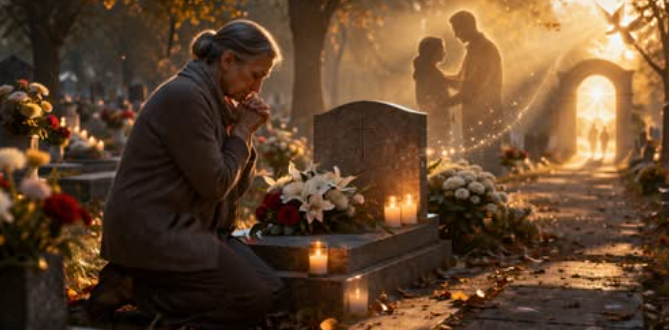
I recall this scene from a couple of years ago when the local cemetery was filled with people visiting their loved ones. I’m not really sure, but I believe it was a holiday, or maybe Memorial Day, and there was this elderly woman who unlike the rest of the people was kneeling beside a grave among the crowd. And then, all of a sudden, she started crying. She seemed very disturbed, so one man approached her and asked her if she was okay and if she needed help. Her words that day stayed with me forever. The woman said, “Today I realized that he knows I’m here… that my presence matters to him.”

It turned out she had been visiting the grave for years, and it somehow turned into a routine for her. She would go, place flowers, and go home. She never really felt any connection or any energy, until that day when she said she felt incredible peace. She couldn’t explain it, really, but kept repeating she felt calm and as though her loved one was beside her.
Whether you want to call it spiritual, emotional, or psychological, it doesn’t change the fact that something significant was going on. And it was significant because it changed her experience.
There are a lot of people out there who think of cemeteries as a place where things end, where the relationship ends and the memories are what’s left. But this approach fails to take into consideration a very crucial fact. A cemetery can be a place where you can connect. When you’re standing before a grave, you’re not just looking at a name on a stone. You’re standing in a space filled with memories, feelings, and the mark of a relationship that has affected your life. This connection does not simply disappear after the person passes away, it just changes in a way.

Even if nothing is visibly happening, there are some powerful things going on inside when you visit a person after they died. The relationship is reinforced because recalling a person with genuine emotion cements the relationship you still maintain inside yourself. This relationship is part of your sense of self, and revisiting it keeps it alive in a different sense. Also, there is a huge difference between showing up out of obligation and showing up with intention. When you show up with emotion, the visit is no longer just a task; it becomes an experience.
So, why is it like that? Because when you are visiting a grave, you give yourself time to heal. As many of us know, grief doesn’t follow a straight line. No, it comes and goes in waves, and usually, when we least expect it. Paying a visit to the grave can be a place to work through these feelings, to cry, reflect, and even just sit in silence. It also forces you to face the reality of life. Cemeteries are a reminder of something that most of us try to avoid: that life is finite. It may be uncomfortable, but it can also be quite grounding. It forces you to realize the importance of your time, your relationships, and the moments that really do matter.

Of course, not every visit is this profound. When a visit becomes routine, cleaning the stone, putting flowers, and going as fast as possible, it can lose all of its significance. The emotional component is what makes it powerful. Another problem is when there is a sense of holding onto anger or resentment. Conflicts do not die when people die. They can actually extend the grief if anger, guilt, or blame is brought into a visit. When something becomes routine, it can also lose all of its emotional significance. It is good to recognize these patterns because it can help change future visits.
What you should no is that there isn’t actually a right or wrong way of visiting the grave of a loved one you lost. What is important, however, is for those visits to be sincere.
Nevertheless, there are a number of things you can do differently to make it more meaningful. First of all, you need time for it. You need to take time so you don’t rush it. Like you need time to actually be there and to allow yourself to feel emotions, whatever they may be. They can be feelings of sorrow, serenity, or even confusion. You need to reflect on shared experiences, but do it naturally. You can even express gratitude, even if it was a complicated relationship, there is always something good to be thankful for. You can even talk to them as if they are still there. It might be symbolic or it might be real, but it is healing. It is not about doing it right or wrong; it is about being genuine.
If you were to walk through a cemetery, you would likely see many graves with no visitors whatsoever. They are never decorated with flowers or candles, nor are they marked in any way as a person of note or as a person who should be remembered. Over time, they become background, a reminder of a life that was lived, but which is now mostly forgotten. Stopping in front of a grave, even for a second, can be a powerful act, as it represents a basic human truth: everyone wants to be remembered. In recognizing a person who has been forgotten, you are also recognizing the basic human truth of existence, connection, and loss.

At some point, the roles would be reversed, and the visitor will eventually become someone people remember. This realization prompts some interesting questions. Will you be remembered for the love you have given to those around you? Will your loved ones come to visit your grave not because of obligation because you mattered? These questions aren’t meant to insert fear in you, but simply to raise awareness. Because at the end, it’s not about the wealth you accumulated, but how you made people feel.
Grasping the deeper meaning behind visiting a grave site may have a huge impact on how you live your life in the present. It may help you cherish your relationships while you still have the chance, settle any misunderstandings before it’s too late, and show gratitude for the people around you more often. It may also remind you to stay present in your interactions with people. In a sense, visiting a grave site every time may not just be about the past; it may also be about the present and the future that is to come.
If you wish to change your grave site visiting experiences for the better, you may start with these reminders: visit a grave site not because you have to but when you are ready or called to; try to let go of any unresolved negative feelings before you visit; try to focus on your life instead; try to allow your feelings of loss to exist; share with the younger generation the importance of remembering; if you can, try to honor those who have been forgotten.

Conclusion
Death does not erase what was once real; it merely shifts the way in which we experience it. When you go to a grave site with presence, with intent, with sincerity, you are not merely remembering a person; you are continuing a relationship in a different way. And in doing so, you might discover something you never expected: not merely a connection to the past, but a deeper understanding of yourself, your life, and what truly matters.