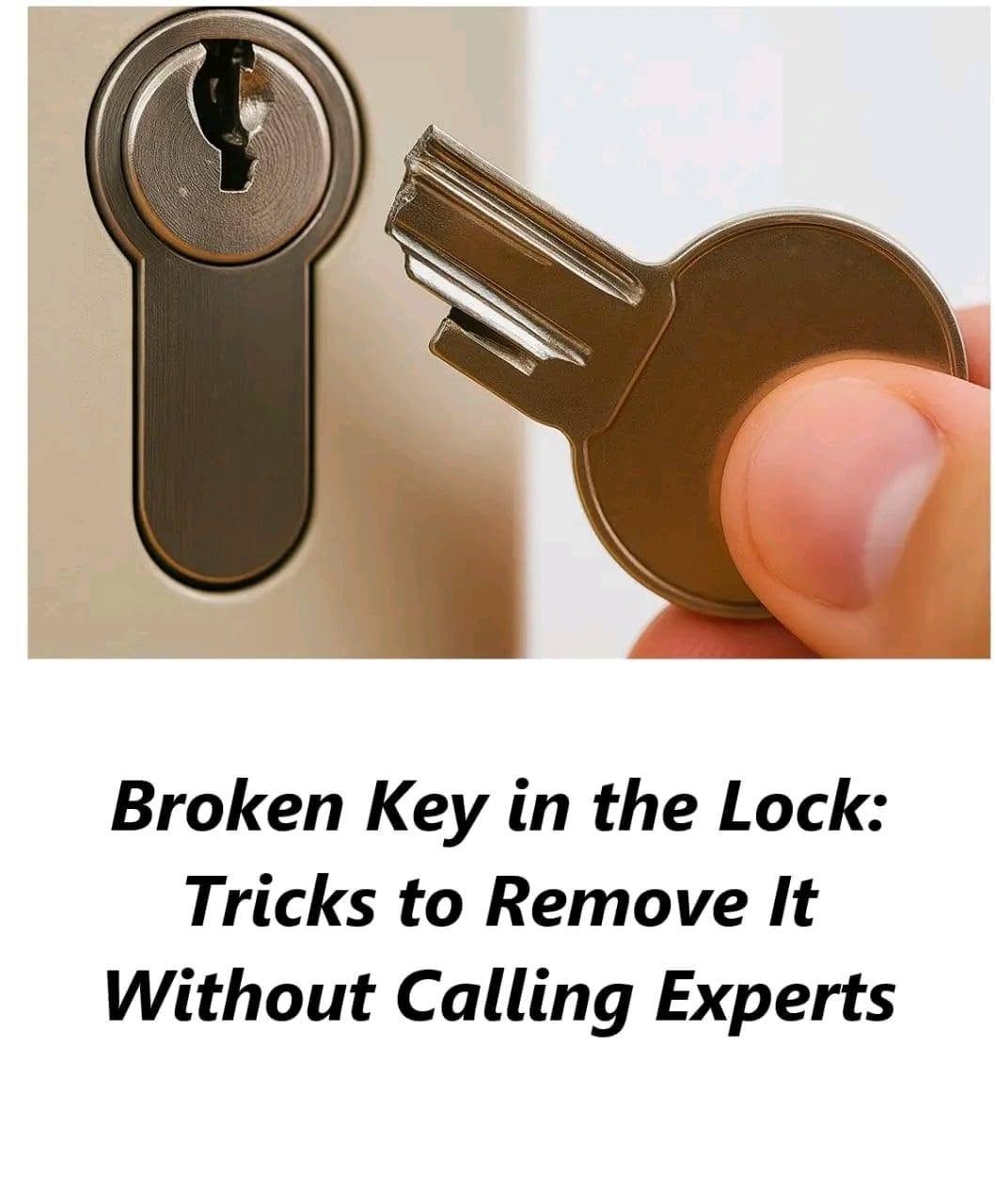
🔑 Broken Key in the Lock? Here’s What to Do (Without Damaging the Door)
A broken key in the lock is frustrating — but it’s a common issue that can often be resolved without damaging your door. With the right tools and a calm approach, you can fix the problem yourself. Here’s how.
🛠️ Why Keys Break in Locks
Common causes include:
Worn or bent key
Poorly lubricated or damaged lock
Excessive force when turning the key
Prevention is key, but if the damage is already done, follow these steps to remove the broken piece safely.
✅ Step-by-Step: How to Remove a Broken Key from a Lock
✅ Step-by-Step: How to Remove a Broken Key from a Lock
1. Check the Lock Position
If the key broke while the lock was open or in neutral, you’ll have a better chance of removing it.
If it broke in the locked position, removal will be harder and may require professional help.
2. Lubricate the Lock
Use a spray lubricant (like WD-40) to loosen any tight parts inside the lock.
Insert the straw attachment into the keyhole and spray lightly.
3. Try to Remove the Key
If a portion of the key is sticking out:
Use needle-nose tweezers, a paper clip, or even a mini hacksaw blade (inserted along the key’s teeth) to gently pull the key out.
If it’s flush inside the lock, try to hook the fragment with a thin wire or strong paperclip.
4. Try a Magnet (if applicable)
Use a strong magnet to pull the key fragment out.
Note: This only works with keys made of iron or steel — not brass or aluminum.
❌ What Not to Do
Avoid making the situation worse:
Don’t insert the other half of the key — it may push the broken piece in deeper.
Don’t use sharp tools like knives or screwdrivers — they can damage the lock cylinder.
Don’t force the lock to turn — this could break the internal mechanism.
🔧 When to Call a Locksmith🔧 When to Call a Locksmith
If:
The lock is in the locked position
The key fragment is completely stuck inside
DIY tools don’t work or risk damaging the lock
…then it’s time to call a professional locksmith.
A qualified locksmith can:
Remove the broken key fragment
Open the door without damage
Repair or replace the lock if needed
🧴 How to Prevent Broken Keys in the Future
✔️ Lubricate locks every 6 months
✔️ Inspect and replace worn or bent keys
✔️ Avoid forcing a key if it resists turning
✔️ Always get professional duplicate keys — low-quality copies can break easily
✅ Final Thoughts
A broken key doesn’t have to mean a broken lock. With a little care — and the right tools — you can often fix the issue yourself. But if you’re ever unsure, a locksmith is just a call away.