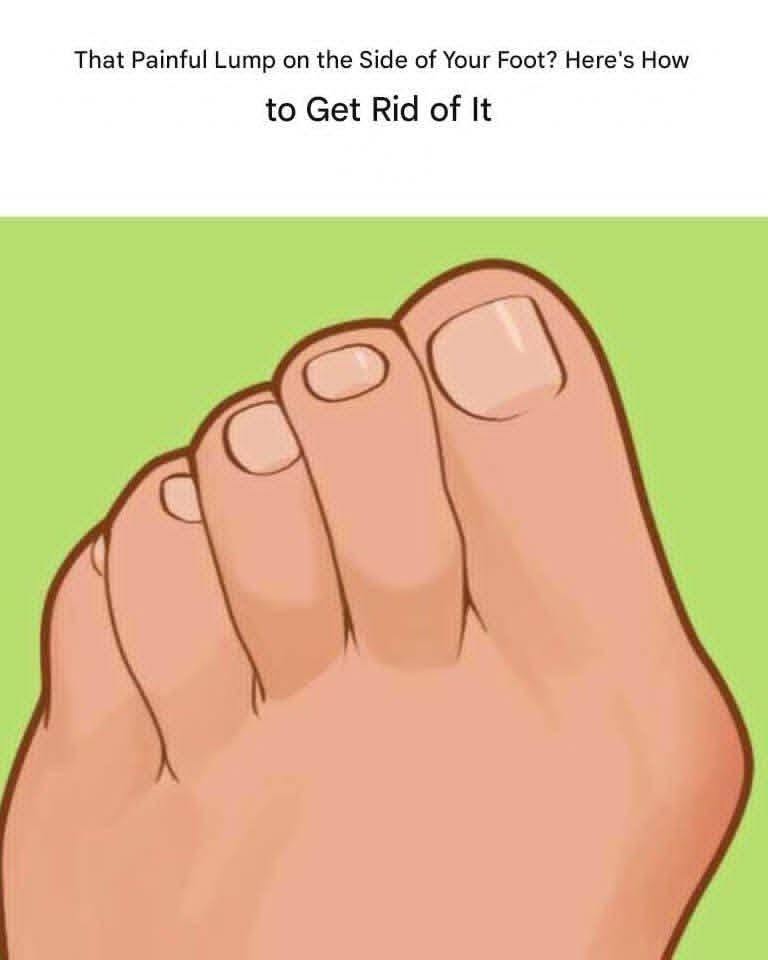
A painful lump on the side of your foot is often a bunion, but other conditions can also cause a similar bump. Here’s an informative overview:
That Painful Lump on the Side of Your Foot? Here’s How to Get Rid of It
A painful bump on the side of your foot can make walking, standing, and wearing shoes uncomfortable. While a bunion is the most common cause, it’s important to identify the problem before choosing treatment.
Common causes
Bunion (Hallux valgus): A bony bump that forms at the base of the big toe as the joint shifts out of alignment.
Tailor’s bunion (Bunionette): A similar bump on the outside of the foot near the little toe.
Ganglion cyst: A fluid-filled lump that may be tender when pressed.
Bone spur or arthritis: Can create painful bony growths around joints.
What you can do at home
Wear wide, supportive shoes with plenty of toe room.
Use protective bunion pads or silicone cushions to reduce friction.
Apply ice for 15–20 minutes several times a day to reduce pain and swelling.
Take over-the-counter pain relievers such as acetaminophen or NSAIDs (if they’re safe for you).
Try gentle stretching exercises to maintain toe flexibility.
Consider custom or over-the-counter orthotic inserts if foot mechanics are contributing to the problem.
When to see a doctor
Seek medical evaluation if:
The pain is severe or keeps getting worse.
The lump becomes red, hot, or rapidly swollen.
You have difficulty walking.
The deformity is progressing.
Home treatments don’t help after several weeks.
A healthcare provider may recommend physical therapy, prescription orthotics, corticosteroid injections (for certain conditions), or, in more severe cases of bunions, surgery to correct the alignment.
Bottom line: Not every lump on the side of the foot is a bunion. Getting the correct diagnosis is important, especially if the lump is growing, very painful, or associated with redness, fever, or numbness. Early treatment often helps relieve symptoms and may slow progression.