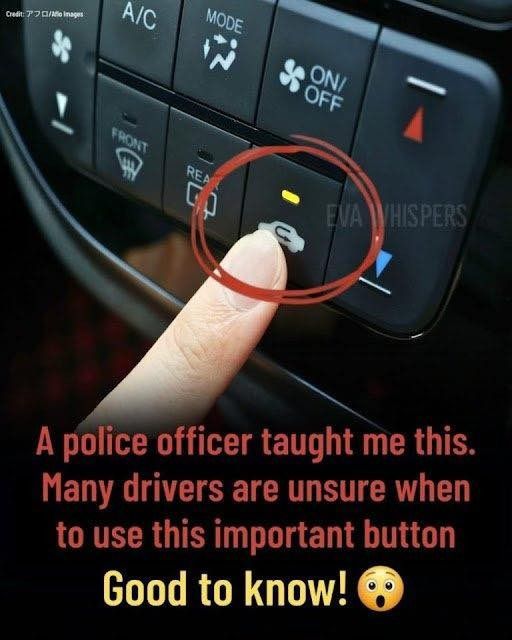
Tucked among your car’s climate controls is a tiny icon: a car with a curved arrow inside it. You’ve probably pressed it by accident—or ignored it entirely.
But this unassuming button—the air recirculation switch—is one of your vehicle’s most powerful (and misunderstood) features. Used correctly, it can cool your car faster, filter allergens, save fuel, and even prevent foggy windows.
Yet most drivers either never use it… or leave it on permanently, unknowingly creating new problems.
Let’s demystify this small but mighty button—so you can drive smarter, breathe easier, and stay comfortable year-round.
🚗 What Does the Recirculation Button Actually Do?
It’s simple—but transformative:
OFF (default): Draws fresh air from outside into the cabin.
ON: Seals the cabin and recycles the air already inside.
That single switch changes everything: temperature, humidity, air quality, and even your AC’s workload.
💡 Think of it like closing your windows at home: You’re choosing between fresh outdoor air or controlled indoor air.
❄️ When to USE Recirculation Mode (3 Key Scenarios)
1. Hot Weather = Faster Cooling
On scorching days, your AC works overtime cooling 100°F+ outside air. But if you switch to recirculation after the cabin starts cooling, it only has to chill 75°F indoor air—cutting cool-down time by up to 40%.
✅ Pro tip: Start with fresh air for 1–2 minutes to vent hot air, then switch to recirculate.
2. Heavy Traffic, Tunnels, or Wildfire Smoke
Recirculation blocks:
Recirculation blocks:
Exhaust fumes
Diesel soot
Wildfire ash
Construction dust
Your cabin becomes a clean-air bubble—critical for kids, asthmatics, or anyone sensitive to pollutants.
3. Allergy Season
Pollen counts peak in spring/fall. Recirculation + cabin air filter = fewer allergens sneaking in through vents.
🌸 Bonus: Replace your cabin filter every 12–15k miles for maximum protection.
⛽ The Hidden Perk: Slightly Better Fuel Economy
Your AC strains the engine, burning extra fuel. By reducing its workload (cooling recycled air vs. hot outside air), recirculation can improve efficiency by 1–3%—small, but meaningful on long trips or daily commutes.
🚫 When NOT to Use Recirculation (Critical!)
1. Cold Weather = Foggy Windows
Recirculating moist breath and wet boots traps humidity, causing windows to fog up fast. In winter, always use fresh air mode to keep glass clear.
2. Long Drives = Stale, Stuffiness
After 15–20 minutes, recycled air feels stale and CO₂ builds up (causing drowsiness). Cycle back to fresh air periodically.
3. Bad Odors Inside the Car
If your cabin smells (spills, pet odors, mildew), recirculation traps and amplifies the stink. Fresh air mode flushes it out.
Discover more
Salads
Flora & Fauna
Salad
🔧 Pro Tips for Maximum Benefit
Combine with A/C: Recirculation works best when paired with AC—it dehumidifies recycled air, preventing that “muggy” feeling.
Don’t overuse: Limit to 10–15 minute intervals in summer; avoid entirely in winter.
Check your cabin filter: A clogged filter makes recirculation less effective (and smellier!).
⚠️ Warning: Never use recirculation with the heater in freezing temps—it’ll fog your windows instantly.
❤️ Final Thought: Small Button, Big Impact
That little curved-arrow icon isn’t just another dashboard doodad. It’s a climate control superpower—if you know when to press it.
So next time you hop in your car:
Summer heat? Recirculate after initial cool-down.
Traffic jam? Seal out exhaust fumes.
Winter drive? Keep it OFF to avoid fog.
Master this tiny switch, and you’ll drive cooler, breathe cleaner, and even save a few drops of fuel—all without spending a dime.
💨 Your turn: Did you know about recirculation mode? Share your favorite climate hack