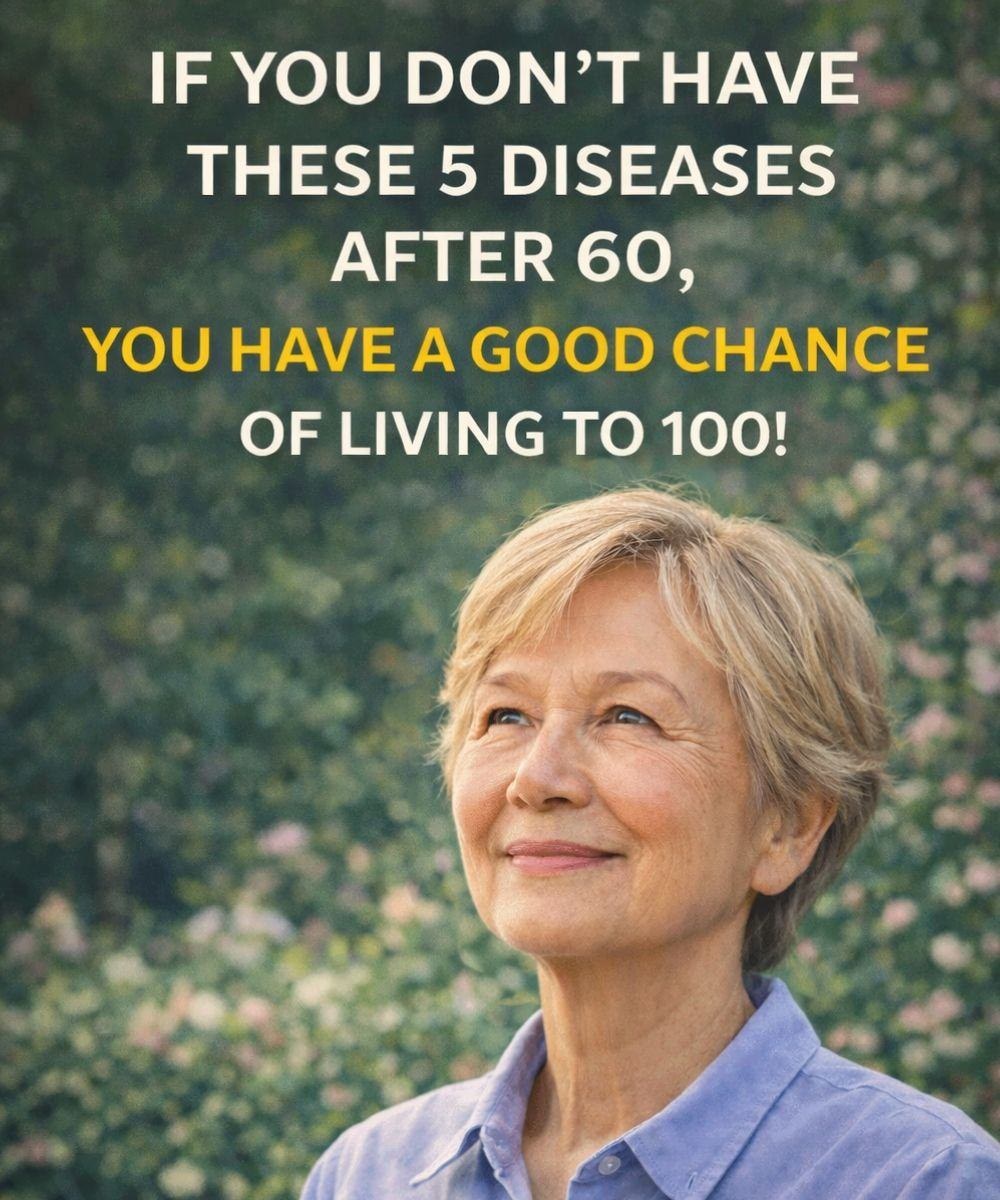
That claim is catchy—but it’s oversimplified and a bit misleading.
There is some truth behind it: avoiding certain major chronic diseases by age 60 does correlate with a longer life expectancy. But it’s not as deterministic as “you’ll probably live to 100.”
What the claim is getting at
Studies often look at people who reach midlife without major diseases like:
Heart disease
Cancer
Stroke
Diabetes
Chronic lung disease
If you make it to ~60 without these, it usually means:
Your lifestyle has been relatively healthy
Your genetics may be favorable
Your body has avoided major cumulative damage
That does increase your chances of living longer.
But here’s the reality
Even if you’re disease-free at 60:
Living to 100 is still uncommon (only a small percentage of people do)
New diseases can still develop after 60
Factors like genetics, lifestyle, environment, and luck all play major roles
In other words:
Being healthy at 60 improves your odds—but it’s not a guarantee of extreme longevity.
What actually matters more for longevity
Research consistently points to a combination of:
Not smoking
Maintaining a healthy weight
Regular physical activity
Balanced diet (Mediterranean-style is often cited)
Good social connections
Managing stress and sleep
These factors matter across your entire life, not just up to 60.
Bottom line
Reaching 60 without major disease is a great sign, but the idea that it means you’ll likely live to 100 is an exaggeration. Think of it as raising your odds, not locking in a result.
If you want, I can break down what separates people who live into their 90s vs. 100+—it’s pretty interesting and not always what people expect.