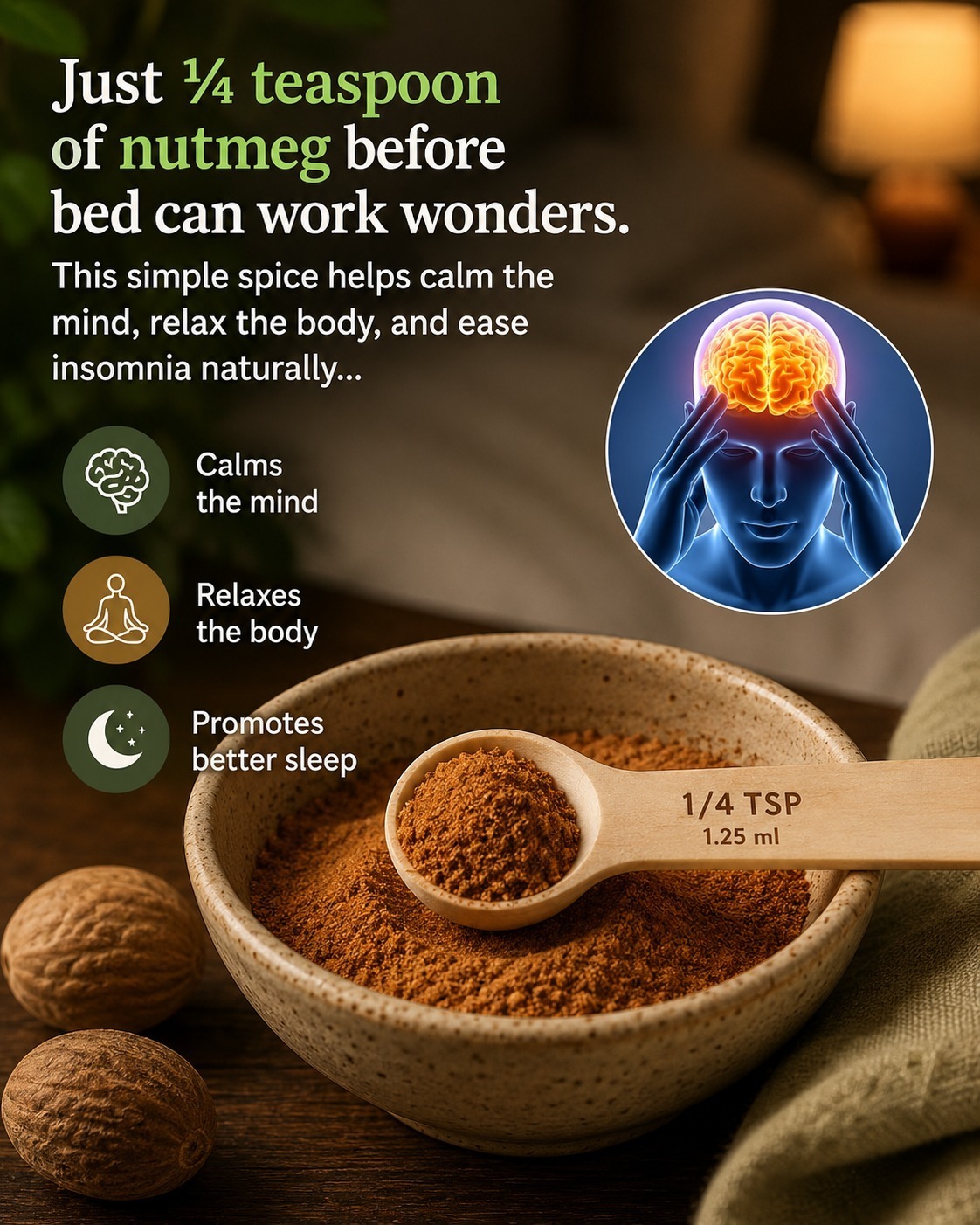
How to Use ¼ Teaspoon of Nutmeg to Help Fall Asleep and Support Better Sleep Naturally
Sleep problems affect millions of people around the world. Some struggle to fall asleep, others wake repeatedly during the night, and many experience restless sleep that leaves them exhausted the next morning. While severe or chronic insomnia should always be discussed with a healthcare professional, many people also search for gentle, natural ways to relax before bed and improve sleep quality.
One traditional remedy that has been discussed for generations is nutmeg.
Used in small amounts, nutmeg has long been included in warm nighttime drinks and calming bedtime routines in various cultures. Many people believe that a small serving—often around ¼ teaspoon—may help promote relaxation and support better sleep when combined with healthy nighttime habits.
However, it is important to understand both the potential benefits and the safety considerations surrounding nutmeg. While culinary amounts may be safe for most healthy adults, large amounts can be dangerous and should never be used as a sleep aid.
This guide explains how nutmeg has traditionally been used, how to safely incorporate small culinary amounts into a nighttime routine, and what precautions you should know before trying it.
What Is Nutmeg?
Nutmeg is a spice derived from the seed of the tree Myristica fragrans, native to parts of Southeast Asia. It has a warm, slightly sweet flavor and is commonly used in:
Baking
Holiday drinks
Desserts
Cream sauces
Spiced teas and milk drinks
For centuries, nutmeg has also appeared in traditional wellness practices, particularly in bedtime beverages intended to encourage relaxation.
The spice contains natural compounds including:
Myristicin
Elemicin
Safrole
Eugenol
These compounds contribute to nutmeg’s aroma and flavor, and some may influence the nervous system in very small amounts.
Can Nutmeg Really Help With Sleep?
Scientific evidence on nutmeg and sleep is limited, and it should not be viewed as a proven treatment for insomnia. However, some people report feeling calmer or sleepier after consuming small amounts as part of a warm nighttime drink.
There are several possible reasons for this:
1. Warm Bedtime Rituals Promote Relaxation
Many nutmeg sleep recipes involve warm milk, herbal tea, or calming drinks. The relaxation may come partly from the routine itself rather than the spice alone.
A calming bedtime ritual can help signal to the brain that it is time to wind down.
2. Aroma and Comfort Association
Nutmeg’s warm scent is psychologically associated with comfort, warmth, and relaxation in many cultures. Smell can influence mood and emotional state.
3. Mild Sedative-Like Effects in Small Culinary Amounts
Some compounds in nutmeg may mildly affect the nervous system. However, research remains limited, and effects vary significantly between individuals.
Importantly, more is not better.
Large doses are unsafe and can cause serious toxicity.
Why Only ¼ Teaspoon?
When people discuss nutmeg for sleep, they usually refer to very small culinary amounts such as:
⅛ teaspoon
¼ teaspoon
This amount is similar to what might normally be used in cooking or beverages.
Using excessive amounts of nutmeg is dangerous and may cause:
Hallucinations
Rapid heartbeat
Nausea
Anxiety
Confusion
Dizziness
Severe toxicity requiring medical care
Nutmeg poisoning is a real medical issue.
Because of this, nutmeg should only ever be used in small food-level quantities.
Simple Nutmeg Bedtime Drink Recipe
One of the most traditional ways to use nutmeg before bed is in warm milk.Ingredients
1 cup warm milk (dairy or plant-based)
¼ teaspoon ground nutmeg
Optional:
Honey
Cinnamon
Vanilla extract
Instructions
Step 1: Warm the milk
Heat milk gently until warm but not boiling.
Warm beverages can naturally encourage relaxation before sleep.
Step 2: Add nutmeg
Stir in ¼ teaspoon of ground nutmeg thoroughly.
Do not exceed this amount.
Step 3: Add optional ingredients
You may add:
A small amount of honey for sweetness
Cinnamon for flavor
Vanilla for aroma
Step 4: Drink slowly
Consume about 30–60 minutes before bedtime while relaxing.
Avoid screens or stimulating activity afterward for best results.
Other Ways to Use Nutmeg at Night
If you do not enjoy warm milk, there are other gentle ways to include small amounts of nutmeg in an evening routine.
1. Nutmeg Herbal Tea
Add a pinch of nutmeg to:
Chamomile tea
Rooibos tea
Caffeine-free herbal blends
This combines calming herbal traditions with warming spice flavor.
2. Nutmeg Oatmeal
A small amount sprinkled into evening oatmeal creates a comforting nighttime snack.
Combine with:
Cinnamon
Banana slices
Almond milk
3. Golden Milk Variation
Nutmeg can be added to turmeric “golden milk” drinks.
Ingredients may include:
Turmeric
Nutmeg
Cinnamon
Warm milk
Black pepper
Honey
Creating a Better Sleep Routine
Nutmeg alone is unlikely to solve chronic insomnia. Sleep quality is usually influenced by multiple habits and environmental factors.
The best results come from combining calming routines with healthy sleep practices.
Healthy Sleep Habits That Actually Matter
1. Keep a Consistent Sleep Schedule
Going to bed and waking up at similar times helps regulate the body’s internal clock.
2. Reduce Screen Exposure Before Bed
Phones, tablets, and TVs emit blue light that can interfere with melatonin production.
Try reducing screen time 30–60 minutes before sleep.
3. Limit Evening Caffeine
Caffeine may remain in the body for many hours.
Avoid:
Coffee
Energy drinks
Strong tea
Some sodas
late in the day.
4. Create a Calm Sleep Environment
A better sleep environment includes:
Cool temperature
Low light
Reduced noise
Comfortable bedding
5. Avoid Heavy Meals Right Before Bed
Large meals late at night may interfere with sleep quality.
Light, calming snacks are generally better.
Who Should Avoid Nutmeg for Sleep?
Even small amounts may not be suitable for everyone.
Avoid using nutmeg medicinally if you are:
Pregnant
Breastfeeding
Sensitive to spices
Taking sedative medications
Managing psychiatric conditions
Living with liver disease
Children should not be given nutmeg remedies unless advised by a healthcare professional.
Important Safety Warning About Nutmeg
This is the most important part of the discussion.
Large amounts of nutmeg are not safe.
Online misinformation sometimes promotes high doses for relaxation or altered states. This is dangerous and medically risky.
Nutmeg toxicity can cause:
Severe confusion
Panic reactions
Hallucinations
Irregular heartbeat
Vomiting
Dangerous neurological symptoms
In severe cases, emergency medical treatment may be required.
Always stay within normal culinary amounts.
Natural Alternatives That May Also Support Sleep
If nutmeg does not appeal to you, other calming nighttime options include:
Chamomile tea
Lavender aromatherapy
Magnesium-rich foods
Relaxation breathing exercises
Reading before bed
Gentle stretching
These approaches are often safer and better studied for long-term sleep support.
When to See a Doctor About Insomnia
Occasional sleep difficulty is common. But persistent insomnia should not be ignored.
Talk to a healthcare professional if you:
Cannot sleep regularly
Wake frequently at night
Feel exhausted daily
Snore heavily or stop breathing during sleep
Experience anxiety or depression linked to sleep
Chronic insomnia may have underlying medical or psychological causes requiring proper treatment.
Final Thoughts
Nutmeg has been used traditionally for centuries in comforting bedtime drinks and calming nighttime routines. A very small amount—around ¼ teaspoon—may help some people feel relaxed when combined with healthy sleep habits and a calming evening routine.
However, nutmeg is not a proven cure for insomnia, and it should never be consumed in large quantities. More is not better, and excessive amounts can be dangerous.
The safest and most effective approach to better sleep is usually a combination of:
Consistent bedtime habits
Stress reduction
Reduced stimulation before sleep
Healthy lifestyle practices