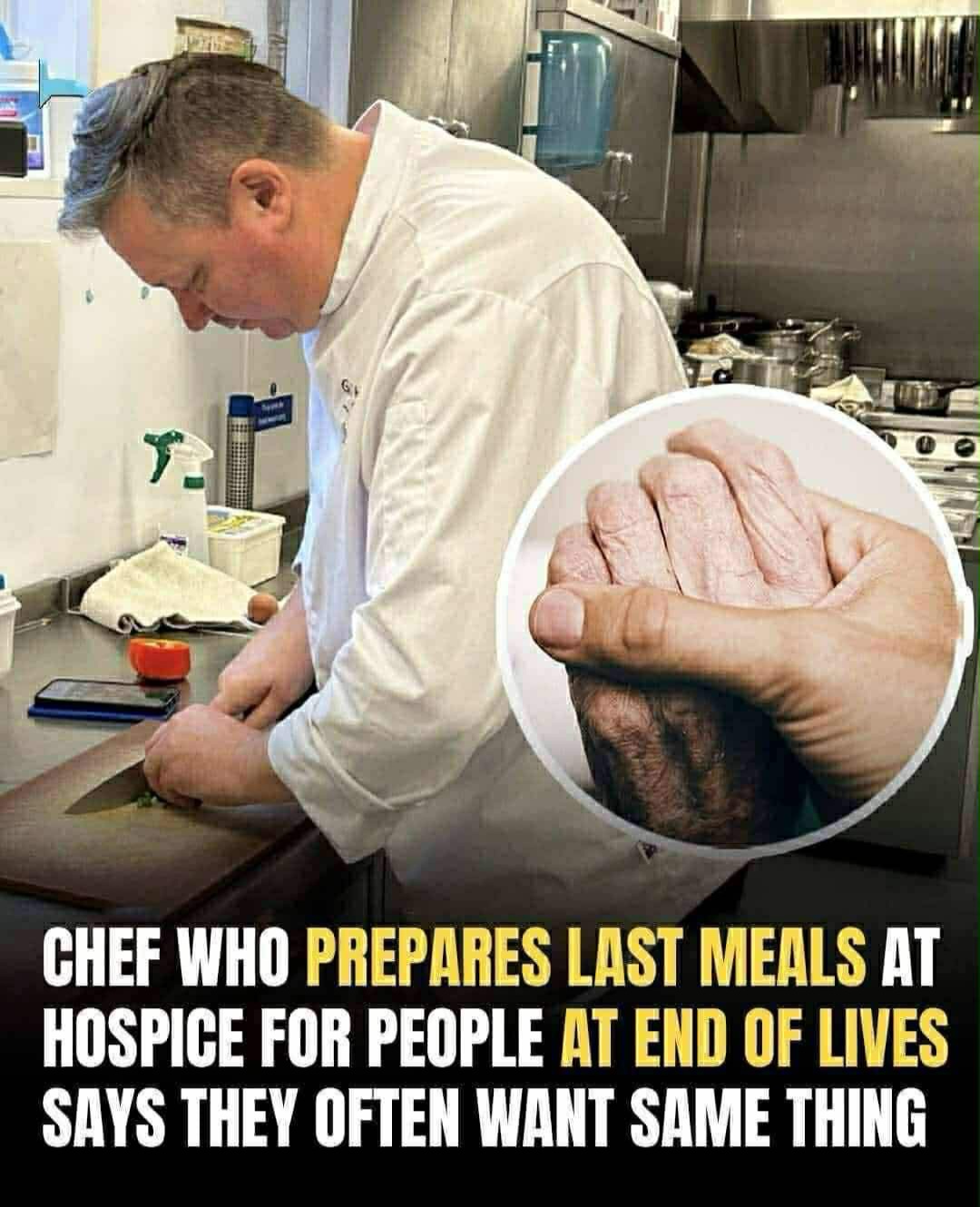
In a world where high-end chefs often chase Michelin stars and the approval of harsh critics, chef Spencer Richards is chasing something more profound, smiles from people who don’t really have many more smiles left. At the Oxfordshire hospice where he works, cooking is about so much more than sustenance; it’s about dignity, about reminiscence, about compassion.
To this incredible chef, each dish he cooks is a subtle act of defiance against the sterile nature of illness. He knows that once the world starts to shrink, there is something to be gained from relishing a taste that feels like home. This is not merely about nutrition but the “much love” that goes into every dish. For him, feeding people at their end is not a responsibility but a holy mission.
From recreating the excitement of street food for someone who has been bored to tears with hospital meals, to preparing a “last meal” that will taste just like home, Spencer takes each request with the gravity it deserves. It is a touching acknowledgment that even at the end of our lives, we are allowed moments of luxury and comfort – all from a chef who sees great meaning in a deliciously prepared meal.
Speaking to the Mirror, chef Richards revealed there is no greater privilege than making the last days of the patients a little bit better with his comforting food.
“My own philosophy is that there can be no greater privilege as a chef than serving someone their final meal. Recently a 21-year-old patient didn’t connect with anything on the standard menu. He was young and didn’t like the usual options, so we talked and he liked street food, so we made that happen,” he shared with the publication.
He recalled making a birthday cake for a 93-year-old patient who spent her entire life in a traditional home where birthday celebrations weren’t common. Baked Goods
“When we surprised her with one, she was in tears. She was absolutely over the moon.”
Actually, a birthday cake is the most common thing the patients at Sobell House Hospice ask for as their days on earth are slowly coming to an end.
“They’re small things, but especially for people who’ve been isolated or are feeling lonely, they mean a lot,” chef Richards said.
Further, he explained that adapting the dishes he prepares is of great importance since most of the patients who are at palliative care lose the ability to swallow. Their taste buds also change, and due to the medications and the treatments they receive.
One thing this hospice chef has noticed, however, is that patients with cancer “get a sweet tooth.”
Also, most of the patients are sensitive to salt.
“Food is a powerfully emotive medium – it can summon childhood memories and create new lasting ones. That’s what we do here.”
In a hospice setting, food and meals take on a greater meaning than mere sustenance. The research and personal experiences of experts, such as Spencer Richards, indicate that when the body is preparing itself for the great transition, there occurs an odd yet poignant change to the palate.
While every patient is different, studies conducted on palliative care bring to light numerous interesting phenomena regarding the desires patients have before death:
The “sweet tooth” phenomenon: As described by Chef Richards, patients at hospice, especially those suffering from cancer, tend to develop a craving for sweet food. The reason behind this lies in the fact that sweet is a taste that lasts the longest even after other tastes are distorted by medicine. While everything else may taste metallic or bitter to the dying patient, the taste buds responsible for “sweet” usually continue working.
The high-salt threshold:On the other hand, sensitivity to salt can reduce. The patients might experience normal food as bland or “tasteless” since their threshold for salt sensitivity has increased. They may have cravings for salty or umami foods, especially those found outside of home-cooked food.
Nostalgia on a plate: From a psychological perspective, those in hospice don’t request luxuries such as lobster and caviar. Rather, they yearn for nostalgia food – that is, the dishes that their mothers used to make or the food that they loved as children. These foods are like biological time machines, which release dopamine from the limbic system, creating a feeling of home and safety in a clinical environment.
The texture shift: Many patients suffer from a condition known as dysphagia or difficulty swallowing. In this context, the task of a hospice chef becomes that of presenting “pureed” or “soft” food as if it were the normal food. Modified versions of popular dishes, such as shredded chicken cooked in thick broth rather than hard steak, enable patients to eat.
In the end, the efforts of individuals like Spencer Richards reveal the value of the kitchen in the healthcare community. In the case of a 21-year-old wanting street food, it is not only about tacos and sliders, but also about a connection to their younger self, who was able to enjoy such things without being labeled a “patient.”
Finally, what we can deduce from this experience is that what is truly essential in hospice care is not a culinary recipe or any kind of seasoning, but human dignity. It does not matter whether a patient needs an extra helping of sugar or salt, but that their last days on earth are filled with moments of pure joy through food.