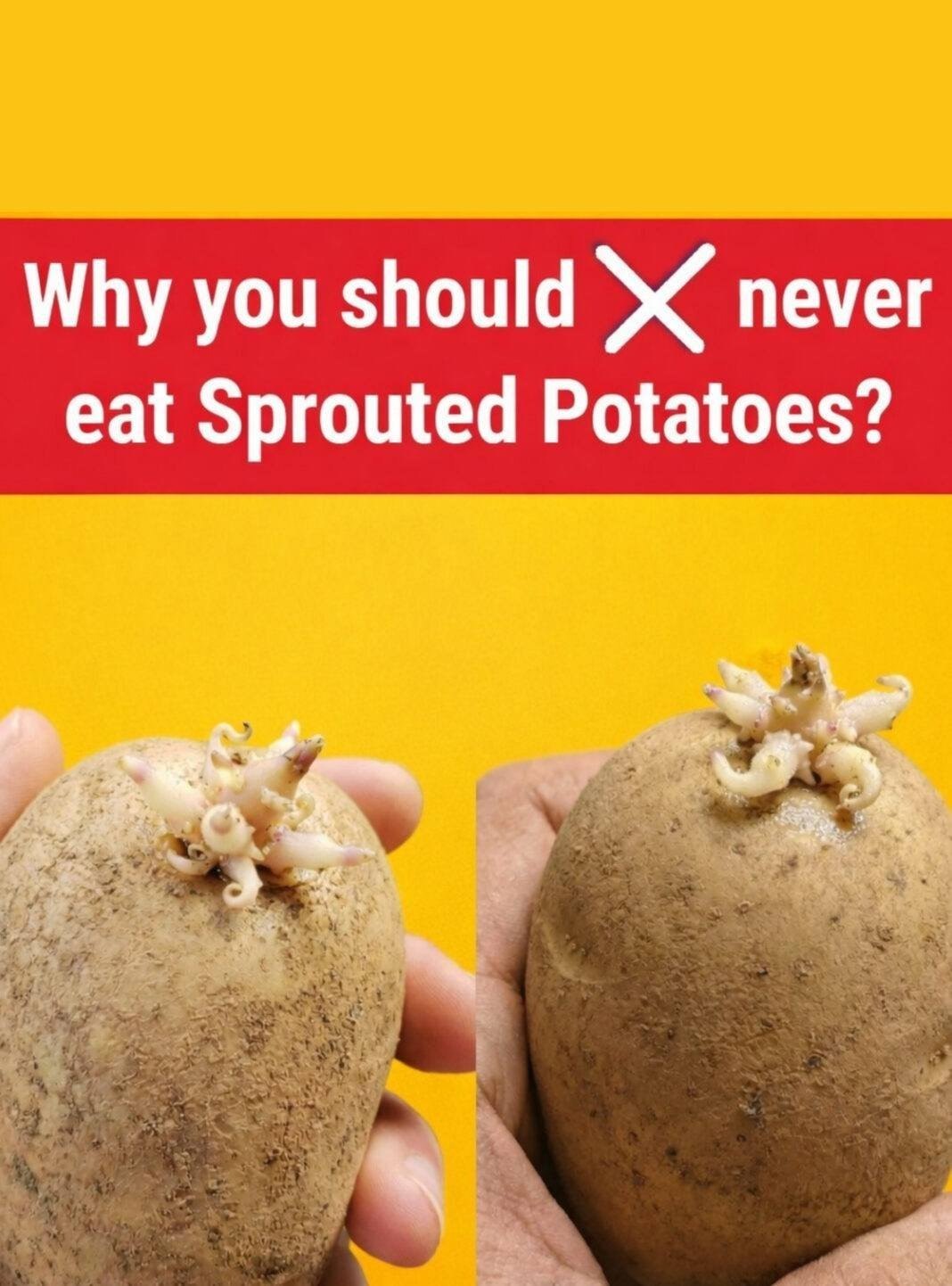
While tidying up a pantry or kitchen cabinet, it’s not unusual to come across potatoes that have started to sprout. Thin shoots, small buds, or longer growths can instantly raise concern and prompt the question: are these potatoes still safe to eat? That hesitation is understandable, as sprouting is a clear sign that the potato is aging. However, the answer isn’t a simple yes or no—understanding what sprouting actually means makes all the difference.
As potatoes age and begin to sprout, natural chemical changes take place inside the tuber. During this process, potatoes produce compounds called glycoalkaloids, most notably solanine and chaconine. These substances act as a natural defense mechanism for the plant as it prepares to grow. In small amounts, they are generally harmless, but when levels increase, they can lead to unpleasant effects such as digestive discomfort, nausea, or stomach upset. The appearance of sprouts is often a visual clue that these compounds may be rising.
Not all sprouted potatoes are automatically unsafe. The overall condition of the potato matters just as much as the sprouts themselves. A potato that remains firm, has only short or minimal sprouting, and shows little to no green coloring can sometimes still be used. In these cases, removing the sprouts and trimming away any green or damaged areas before cooking can reduce potential risk. Cooking does not eliminate glycoalkaloids entirely, which is why careful inspection beforehand is essential.