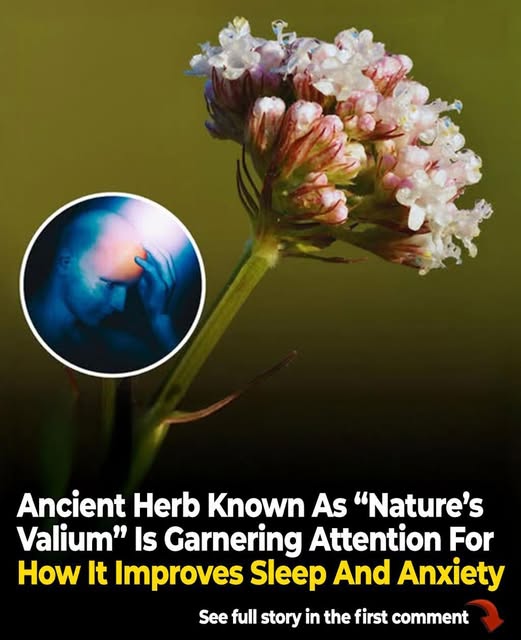
Valerian has become one of the most recognizable names in natural anxiety remedies. It appears in teas, capsules, tinctures, blended sleep formulas, and late-night internet searches. The herb also carries one of wellness culture’s strongest nicknames: nature’s valium. That phrase is memorable, yet it also invites confusion. NIH says valerian and Valium are “not related to each other.” Even so, people still link them. Valerian is an herb, not a prescription tranquilizer. The science around it also remains less settled than the marketing. Still, the herb has endured for centuries because people have long linked it with calmer evenings and better sleep. That history gives valerian weight, yet history alone cannot answer whether it truly works for modern users.
The more useful question is narrower and more honest. Can valerian offer modest help for restless nights or mild tension without being sold as a cure? Official sources suggest this cautious framing is the right one. NIH says evidence for sleep is inconclusive. NCCIH says sleep evidence remains inconsistent. The same source says there is not enough evidence to draw conclusions for anxiety. At the same time, short-term safety looks acceptable for many adults. That helps explain valerian’s place among herbs for sleep and natural anti-anxiety supplements. The real story sits between hype and dismissal. Valerian is neither a miracle nor a meaningless relic. It is an old herbal option with mixed evidence and plausible sedative activity. It also comes with clear limits that sensible readers should understand before buying into the label.
Why Valerian Still Holds Such a Strong Reputation
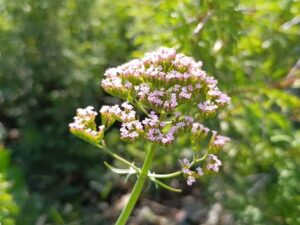
Valerian’s staying power begins with its history. The NIH Office of Dietary Supplements says valerian has been used medicinally since ancient Greece and Rome. The same fact sheet says Galen prescribed it for insomnia. By the 16th century, people also used it for nervousness, trembling, headaches, and heart palpitations. Those old references matter because they show how deeply valerian became linked with sleepless nights and unsettled nerves. This link formed long before modern supplement shelves existed. That long use also shaped public trust. When a remedy survives for centuries, many people assume repeated use reflects real benefit. Sometimes that assumption points toward a useful plant. Sometimes it only shows how strongly hope travels through medical history. With valerian, both forces seem to be at work.
Even NCCIH notes that the roots and rhizomes are used medicinally. The herb is still promoted for insomnia, anxiety, stress, and depression. The reputation, therefore, did not appear from nowhere. It grew through folk use, medical traditions, commercial packaging, and repeated word of mouth. Still, history cannot do the work of a modern trial. Official reviews keep separating Valerian’s long story from the strength of its evidence. The NIH fact sheet says scientists still do not agree on which components drive valerian’s effects. It also says valerian’s activity may result from interactions among several compounds. That uncertainty weakens confident claims from the start. It also makes strong branding sound more certain than science allows. A product can be old, popular, and biologically active, yet still remain difficult to define with precision.
European regulators give valerian a careful form of recognition. That helps explain the herb’s continued prestige. EMA recognizes one valerian extract for “mild nervous tension and sleep disorders.” Yet it also draws an important line. Some uses are backed by clinical studies. Other uses are supported through long-standing medicinal tradition. That is a meaningful regulatory distinction. It lets valerian retain legitimacy without pretending the data are stronger than they are. The same monograph also notes valerian has a “gradual onset of efficacy.” That phrase signals a slower, less dramatic intervention. In the United States, valerian is sold as a dietary supplement. NIH notes that supplement formulations may vary. It also notes they are not required to be standardized before sale in the same way as drugs.
One valerian capsule, therefore, may not closely resemble another. The nickname nature’s valium survives because it compresses all this complexity into one easy phrase. Yet the official record says something less flashy. Valerian has a long medicinal history and possible sedative activity. It also has uneven product consistency and evidence that still leaves room for doubt. That mixture is exactly why it survives. It sounds familiar enough to trust, yet uncertain enough to keep debate alive. That combination is enough to sustain a strong reputation. It also explains why valerian keeps returning in articles, supplement blends, and bedtime advice. Still, it is not enough to settle the question. Its reputation survives because tradition, regulation, and consumer demand keep reinforcing one another, even while the scientific picture remains incomplete.
What the Sleep Evidence Actually Supports
Sleep is where valerian has the strongest case. Even here, however, the case remains limited. The NIH health professional fact sheet reviews randomized, placebo-controlled trials and reaches a restrained conclusion. Its wording is direct and careful. The evidence for treating sleep disorders is “inconclusive.” That sentence deserves weight. The source is not trying to sell valerian. It is also not trying to dismiss the herb for effect. It summarizes the trial record. Some of those trials did report encouraging results. In one small study, 8 volunteers with mild insomnia took an aqueous valerian extract. The 450 mg dose reduced average sleep latency from about 16 minutes to 9 minutes. NIH also notes that participants rated sleep latency and sleep improvement more favorably after the 450 mg dose.
Another study followed 121 participants with documented nonorganic insomnia for 28 days. They received either 600 mg of a standardized valerian preparation or a placebo. After 28 days, the valerian group showed decreased insomnia symptoms on the assessment tools used. The improvement also grew between day 14 and day 28. Those findings help explain why valerian never disappears from sleep conversations. The herb has shown signals of benefit in some trials. This is especially true for people who struggle to fall asleep or report poor subjective sleep quality. Even the 2006 systematic review led by Dr. Susan Bent at the University of California, San Francisco, said valerian “might improve sleep quality” without producing side effects. That phrasing sounds promising, yet its caution matters. The review did not say that valerian clearly works.
It said valerian might help, which is a very different claim. The limits become clearer once the studies are placed side by side. NIH points out that the trials differed in dose, source material, outcomes, and design quality. Some used people with only mild symptoms. Others included volunteers who did not clearly meet strict insomnia criteria. Several studies also had small sample sizes. NIH also says none of the reviewed studies checked whether blinding actually worked. None calculated the sample size needed to detect a clear effect. Only one validated the outcome measures. Later data did not resolve those weaknesses. NIH describes a crossover study of 16 participants with documented insomnia.
In that study, standardized valerian had no effect on 14 of 15 sleep measures. NCCIH adds that the evidence on sleep remains inconsistent. It also notes a 2017 American Academy of Sleep Medicine guideline. That guideline recommended against valerian for chronic insomnia in adults. The 2024 umbrella review by Valéria Valente and colleagues reached an even firmer summary. It found no evidence of efficacy for insomnia across the systematic reviews it examined, despite a good safety profile overall. That does not mean valerian can never help anyone sleep better. It means the evidence does not support broad confidence. The best reading of the data is modest. Valerian may help some people, in some circumstances, with some preparations. Yet the average effect has not proved strong or reliable enough to treat it as an established insomnia therapy.
How Strong Is the Case for Anxiety Relief?
The anxiety claim needs tighter boundaries than the sleep claim. Valerian is often marketed as one of the leading natural anxiety remedies. That language can sound persuasive when a herb has centuries of use behind it. Yet official sources remain far more guarded. NCCIH says there is not enough evidence to allow conclusions about whether valerian is helpful for anxiety. The agency repeats the same broader point in its anxiety guidance. There, it says short-term safety appears acceptable for many adults. It also says the effectiveness for anxiety remains uncertain. That matters because anxiety is not one vague feeling that rises and falls over a difficult week. Clinical anxiety disorders can affect concentration, rest, muscle tension, sleep, daily function, and long-term health. A herb does not earn credibility in that area through reputation alone.
It has to show clear, repeatable benefits in studies with proper diagnostic standards and meaningful outcomes. Valerian has not reached that standard. The 2006 Cochrane review by Lilian S. Miyasaka, Álvaro Nagib Atallah, and Bernardo A. Soares found only one small study that met its criteria. The authors concluded there was “insufficient evidence.” They could not judge efficacy or safety against placebo or diazepam. That wording should reset the conversation immediately. It does not say the herb failed absolutely. It says the evidence base was too thin to support a confident answer. That weakness has shaped every serious review since then. It also helps explain why confidence remains so limited. That small evidence base explains why valerian is better described as a possible adjunct for mild tension.
It is not a proven treatment for anxiety disorders. The EMA uses exactly that narrower frame. It describes certain valerian root medicines as suitable for relief of mild nervous tension or mild symptoms of mental stress. Even that recognition comes with limits. EMA also notes that “mild nervous tension” does not correspond to a formal medical diagnosis. Generalized anxiety disorder is a different matter. When the discussion moves from everyday stress into clinical anxiety, the standard of proof needs to rise. NIMH says GAD treatment involves “psychotherapy, medication, or both.” Care should match the person and situation. That guidance reflects the complexity of the disorder itself. Anxiety can stem from temperament, trauma, biology, sleep disruption, chronic illness, medication effects, or sustained life stress.
It often benefits from therapy that addresses thought patterns, avoidance, and physiological arousal in a structured way. Against that background, valerian looks much smaller than the nickname suggests. It may offer a calming effect for some users, especially when tension and poor sleep travel together. However, the evidence does not support selling valerian as a dependable answer for persistent anxiety. Readers drawn to natural anti-anxiety supplements should see valerian as an uncertain option with limited clinical support. They should not see it as a botanical equivalent of recognized anxiety treatment. That does not strip valerian of interest, yet it does place it in the category of cautious experimentation, where realistic expectations matter more than bold promises or borrowed nicknames today.
What Safety Questions Matter Most Before Trying It

Valerian appears reasonably safe for short-term use in many adults, but side effects, interactions, and unknown long-term risks still require caution. Image Credit: Pexels
Valerian’s most practical strength may be its short-term safety profile. NCCIH says research suggests valerian is generally safe for short-term use by most adults. It adds that valerian has been used with apparent safety at 300 to 600 milligrams daily. Those trials generally lasted up to 6 weeks. For many readers, that sentence explains why valerian remains so popular. A supplement does not need overwhelming proof of benefit to attract attention. It only needs to look relatively low risk in the short run. That is especially true in the sleep market, where many people want something milder than prescription sedatives. Yet the second half of the safety message matters just as much. NCCIH also says the safety of long-term use is unknown. NIH echoes that point in its health professional fact sheet.
It states that although few adverse events have been reported, long-term safety data are not available. In other words, valerian earns only a limited form of reassurance. It has not produced the kind of major safety alarm that would push it off the market. Yet it also lacks the depth of long-term evidence that would justify casual nightly use without reflection. That gap becomes more important when people take valerian for months. It also matters when nightly use slowly becomes a habit. It also matters when they combine it with alcohol or other sedating supplements. A herb can look mild on its own, yet behave differently inside a crowded nightly routine. That is especially true when drowsiness is already being pushed by another substance.
The side effects and cautions are not trivial, even if they are usually mild. NCCIH lists headache, stomach upset, mental dullness, excitability, uneasiness, and vivid dreams among reported side effects. It also notes that some people may experience withdrawal symptoms if they stop abruptly after chronic use. These can include anxiety, irritability, insomnia, heart disturbances, and, in rare cases, hallucinations. NIH adds dizziness, pruritus, gastrointestinal disturbances, and next-morning sleepiness in some studies, especially at higher doses. A very rare liver injury has also been reported. Those reports usually involved valerian taken with other herbals, which makes causation hard to pin down. Interaction risk is another serious issue. NCCIH says valerian should not be taken with alcohol or sedatives because it may have a sleep-inducing effect.
The NIH fact sheet also warns about additive effects with benzodiazepines and barbiturates. It also mentions anesthetics such as propofol and supplements including kava, melatonin, and St John’s wort. EMA adds further practical cautions for users. It does not recommend valerian root medicines for children under 12. It also advises against use during pregnancy and breastfeeding. The same agency warns users not to drive or operate machinery while taking valerian medicines. Together, those points make the safety picture clearer. Valerian is not wildly dangerous for most healthy adults in the short term. Yet it is not casual bedtime candy either. Used carefully, valerian may remain a reasonable short-term option, yet its safety depends on dose, duration, product quality, and combinations.
Where Valerian Fits in a Smarter Sleep or Stress Plan
The smartest way to think about valerian is to place it inside a wider plan. That keeps the herb in proportion. It should not carry every hope on its own. EMA says valerian has a “gradual onset of efficacy.” It advises 2 to 4 weeks of continued use. That already separates valerian from the fantasy many shoppers carry into the supplement aisle. It is not designed to act like an on-off switch for a bad night. It may take time, and even then, the effect may remain modest. EMA also lists different preparations and dosing approaches. These include valerian root tea, liquid preparations, and standardized extracts taken before bedtime. Some regimens also include an earlier evening dose. NIH and NCCIH describe commonly studied dose ranges around 300 to 600 milligrams daily for short-term use.
However, both sources warn that formulations vary and active constituents remain uncertain. Dose discussions therefore need humility and caution. A number on one bottle does not guarantee the same chemistry or effect as the same number on another bottle. Readers who try valerian should give it a defined trial. They should avoid combining it with alcohol or other sedatives. They should also stop treating it as a magical herb if nothing changes after a reasonable period. The more disciplined the expectation, the less likely disappointment turns into exaggeration. It also becomes easier to judge whether the herb is doing anything useful at all. That kind of honesty is rare in supplement culture, yet it matters here. More importantly, people with chronic insomnia or persistent anxiety should not let valerian crowd out proven care.
NHLBI says CBT-I is usually the “first treatment option” for long-term insomnia and can be very effective. That recommendation matters because chronic sleep problems often involve learned arousal. They also involve irregular routines, anxiety about sleep itself, and habits that keep insomnia alive. A herb cannot address all of that. For anxiety, NIMH says treatment commonly involves psychotherapy, medication, or both, depending on the person’s needs and situation. Those treatments exist because anxiety disorders can become entrenched and disruptive in ways that self-directed supplements cannot reliably manage. Seen in that light, valerian has a narrower but still understandable place. It may appeal to people with mild evening tension or occasional difficulty falling asleep.
It may also appeal to people who want herbs for sleep and carry realistic expectations. Some will value that middle ground more than dramatic promises. Others may simply want a trial that stays realistic from the start. It does not deserve the burden of being called a natural stand-in for established medicines. The better verdict is simpler and clearer. Valerian is an old herb with mixed evidence and a decent short-term safety profile for many adults. It may earn a place at the edge of a sensible routine. Yet it does not belong at the center of treatment when sleep or anxiety problems become chronic. The same applies when they become disabling or medically complex. Professional guidance matters when insomnia or anxiety stops being occasional.