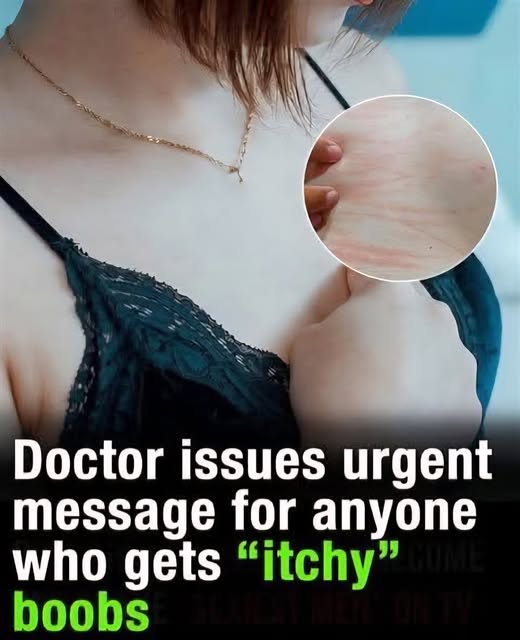
Breast itching is something that many women have experienced at some point in their lives. It can be a mild problem or a possible sign of an underlying issue. In most cases, it is simply a matter of dry skin, hormonal changes, or irritation from clothing. While occasional itching is not something to be worried about, if it persists, it can be a sign of something more serious going on in your body and should not be ignored.
In some instances, breast itching can be associated with more alarming conditions like inflammatory breast cancer and Paget’s disease of the breast. It is thus crucial for women to be aware of when an otherwise common symptom crosses the line and requires medical attention. While it is no secret that breasts often cause discomfort due to issues like poorly fitting bras and back pains, itching is becoming an alarming symptom for a number of women.
This awareness is evidenced by the rising search engine results for words such as “itchy breast.” The searches, which also include phrases such as “one itchy nipple” and “itching below breast,” tend to peak during times such as Breast Cancer Awareness Month, where there is greater awareness of possible symptoms.
Dr. Tim Woodman, Medical Director for Cancer Services at Bupa UK Insurance, explains that occasional itching in the breast area is not unusual and often has straightforward explanations.
“It’s rare for itchy breasts to be a symptom of breast cancer,” Woodman said, “but if you have a patch of skin on or around your breasts that you find yourself regularly scratching, it’s always worth getting it checked by a health professional.”
Inflammatory breast cancer (IBC): IBC is a rare and aggressive form of this disease that may also bring noticeable changes to the skin, such as redness, swelling, warmth, and persistent itching, according to the Cleveland Clinic. There may also be feelings of breast heaviness, tenderness, or a sudden change in size.
Paget’s disease of the breast: Paget’s disease of the breast is another rare form of breast cancer that “causes scaly or crusty skin on the nipple. The affected area may slowly grow to involve the skin around the nipple, called the areola,” according to the Mayo Clinic. This condition, different from Paget’s disease of the bone, “refers to breast cancer in the nipple,” and may cause itching, redness, flaking, or burning of the skin.
According to the National Breast Cancer Foundation, about 1 in 8 women in the United States will be diagnosed with breast cancer at some point in their lives. In 2026 alone, an estimated 321,910 women and 2,670 men are expected to be diagnosed with invasive breast cancer.

The Mayo Clinic reports that symptoms include:
A breast lump or thickened area of skin that feels different from the surrounding tissue
A nipple that looks flattened or turns inward
Changes in the color of the breast skin. In people with white skin, the breast skin may look pink or red. In people with brown and Black skin, the breast skin may look darker than the other skin on the chest or it may look red or purple
Change in the size, shape or appearance of a breast
Changes to the skin over the breast, such as skin that looks dimpled or looks like an orange peel
Peeling, scaling, crusting or flaking of the skin on the breast
“Advances in breast cancer screening allow healthcare professionals to diagnose breast cancer earlier. Finding the cancer earlier makes it much more likely that the cancer can be cured. Even when breast cancer can’t be cured, many treatments exist to extend life,” the Mayo Clinic writes.